
I found Nepal an interesting place. I stayed there for two months and feel like I saw a good representative sample of the country. I spent more than a week in the capital, Kathmandu. I went trekking to Everest Base Camp. I went to Buddha’s birthplace in Lumbini. I went to the touristic city of Pokhara. I stayed with local people in Chitwan. I volunteered in rural mountain villages in Nuwakot.
There are plenty of things I like about Nepal (the landscape, the food) and some things I really don’t like.
I have been travelling for three months so far, so being in one country for two months makes it feel quite “homely”, familiar. I could convert the currency easily, say a few words and understand a few more. I really enjoyed the food (even after having Dahl Baht twice a day for a week, for two weeks)! The country seems to have a generally relaxed way of living. People just get on with stuff. Roads, facilities, services aren’t perfect but you deal with it. No stressing!
However, I also saw many things that I was not happy with. Things that I think let this potentially great country down. I was told by two different men that “NEPAL” stands for Never Ending Peace And Love. And it does, if you agree with their points of view and their customs. Otherwise, it does not. The first man who told me this was someone who kept hassling me for a couple of days at a hostel restaurant. The second one was my trekking guide, who then proceeded to drink far too much homemade wine and make an offensive, sexist comment about women (and throw a rock at a crocodile the next day).
I’m going to break down the issues I experienced into categories, partly for information but I think largely, to get the issues off my chest.
Never Ending Peace And Love (but only if you’re like us)
1. Animals
Animals seem to be excluded from this acronym. If you’re a street dog, you might be kicked by some man (for no reason other than you’re standing near him) or perhaps fed poisoned meat in order to control your numbers (as I read the government in Kathmandu do). If you’re the family dog, just walking around the yard one evening, the family kid will inexplicably pick up a stick and thwack you, as I saw in one of the mountain villages (the dog just took it). I told the kid off and gave the dog a hug, and the kid copied. I guess people copy what they see. If you’re the family kitten, mewling for food, you’ll be shouted at to “shush”, kicked away by feet, be put up on a high ledge out of the way, where you are supposed to stay silently (another mountain village). If a kid does pick you up, it will be to pull you about and he won’t let you get away, despite your struggles.
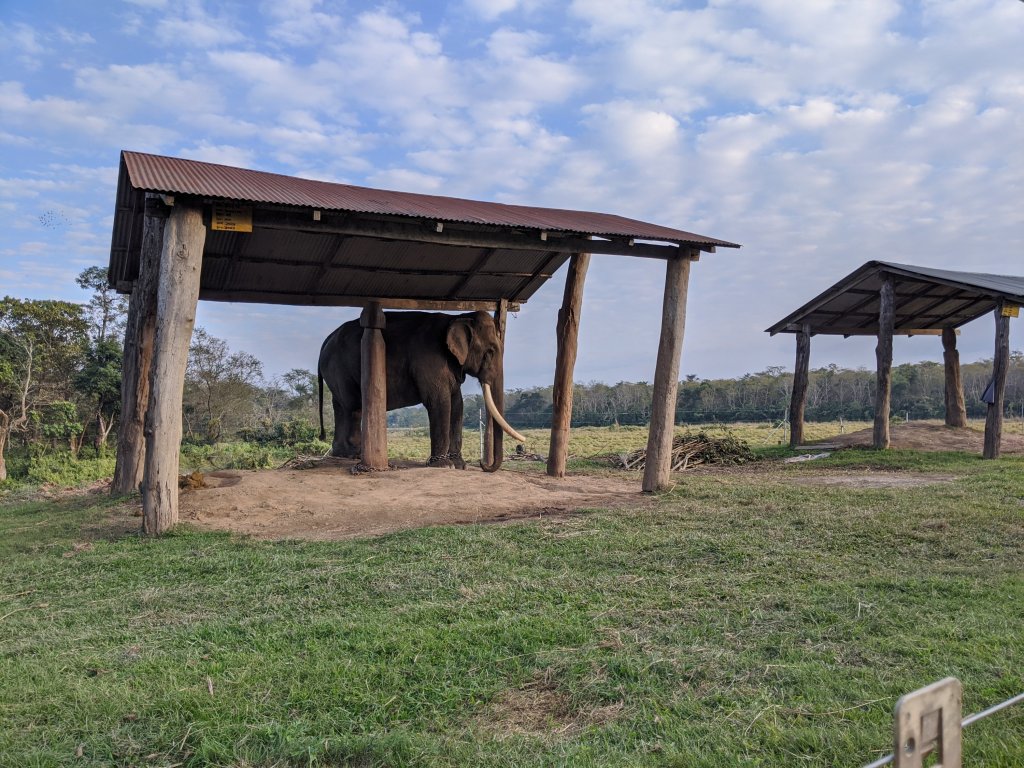
If you’re an elephant you’ll be broken and beaten and used. Chained and trained. Hit and abused.
If you’re an animal that someone wants to eat, for example a chicken, you’ll be kept in a cage outside of a butchers. By the state of you (and the state of the cage), I’ll guess you were raised intensively. You will wait in that cage in the full sun, watching all your chicken mates disappear, until someone picks you. You’ll be fresh for sure. But chickens aren’t stupid. People like to think they are, to justify killing them. Chickens know what is going on. They cluck to their chicks in their eggs. They have been studied and some people say you’re as smart as a dog. They understand fear and happiness. The remnants of the other chickens are just behind you, in the open-fronted butchers. They can hear things. “Peace and love.” 🙄 Maybe if you’re a chicken in the mountains, you and six other chickens (per family) will get your head pulled off in an annual Buddhist worship to give thanks to the forest god. My view of Buddhism has altered since travelling.
2. Women
If you’re a woman, you might be banished to a shed or become an “untouchable” whilst menstruating. You might die in that shed.
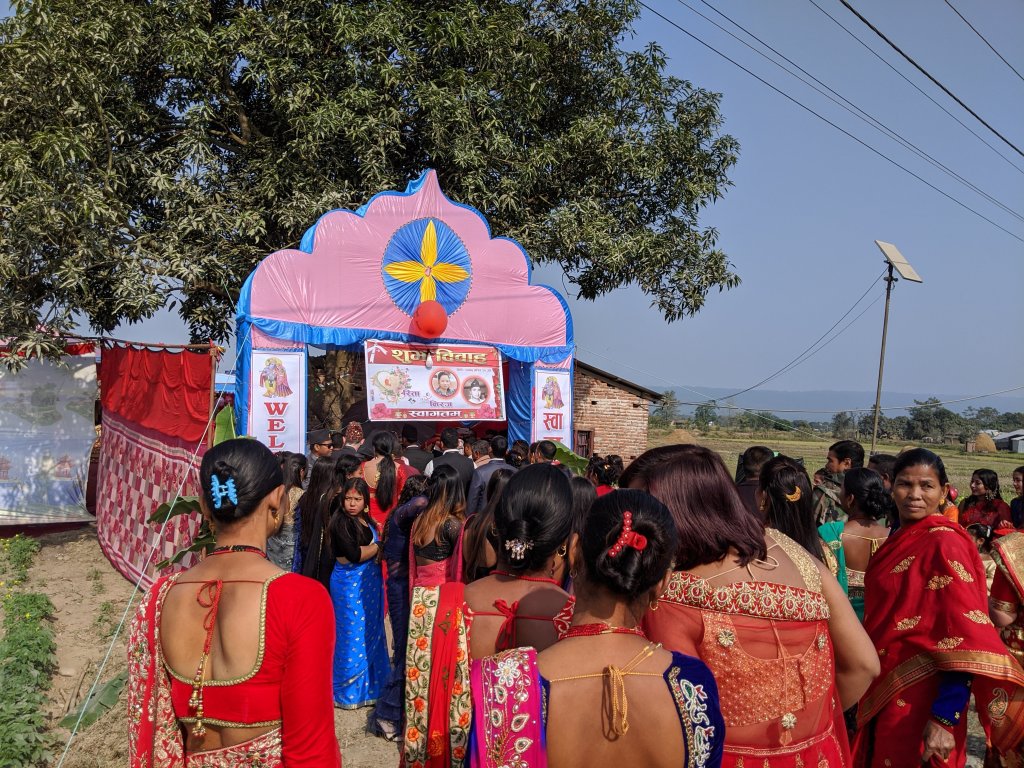
You might have an arranged marriage. An arranged marriage is different to a forced marriage, yes, but when I happened to be invited to a wedding that turned out to be an arranged marriage, we asked our hosts if the bride could have said “no”. A cagey, mumbled response, a lack of a straight “Yes she could have said no” response, coupled with seeing the bride distraught, in tears, for two days, in addition to the fact that she will not be allowed to see her family again (except maybe once or twice a year), let alone the fact that this is deemed acceptable because (as I was told in a stone-cold, forceful tone of voice, coupled with a stern, straight face), “It’s our culture”… Makes me think that some “arranged marriages” in the Nepalese culture (and others) are not very beneficial for the equality of women. And that’s without going into the ceremony itself, where traditionally the groom will say:
You are my wife. You’ll act according to my wishes and obey my instructions.
http://thebigfatindianwedding.com/2015/the-essential-guide-to-nepali-weddings-wedding-traditions?amp
Predominantly, but not restricted to, rural communities, the women have little opportunity. We were told “95% will live as housewives”. I stayed at a Tharu Community Homestay that was specifically run by women, for women, in order to give them a chance at earning their own income.
Human trafficking. Right. In some rural communities, families choose to send their sons to school instead of their daughters. Their daughters can be seen as a burden. Sometimes they are married off, sometimes very young. Sometimes they are trafficked, sometimes as young as 11. I spent a week volunteering with an organisation, Sasane, that worked with survivors of human trafficking. I went to rural mountain villages in Nuwakot where girls used to be trafficked from the villages and across the border into India. I taught some of the kids English. Girls are not trafficked from these particular villages any more, but it is estimated that 54 women and girls are trafficked from Nepal each day. Each day. I was told that they are forced into prostitution and/or other forms of slavery. Some never come back. They are lost. Some die, from unwanted pregnancies, diseases or abuse. Some can’t come back. Some are unaccepted by their families even if they do come back.
Never. Ending. Peace And Love. 🤔😒
A final note on women… I hardly saw many. It was mainly men. Men lounging in the streets. Men leaning against motorbikes. Men sitting drinking coffee. Men in the shops. Men in the restaurants. Men in the cars. Men in the hostels. I once walked around Sauraha in Chitwan for a day and saw three Nepali women. Three. Where are they?
Also… Domestic violence is the greatest cause of women’s injuries in Nepal (womenepal.org). It is very difficult for a woman to get justice. The justice system, the police officers, even family members promote “reconciliation”, regardless of what the man or husband has done. The woman is often completely financially dependent on him, so it is very difficult for her to leave. I visited a police station with Sasane and happily I saw a woman getting a lot of help from family members as she was filing her report against her husband/abuser, but this tends to be the exception to the rule.
3. Environment
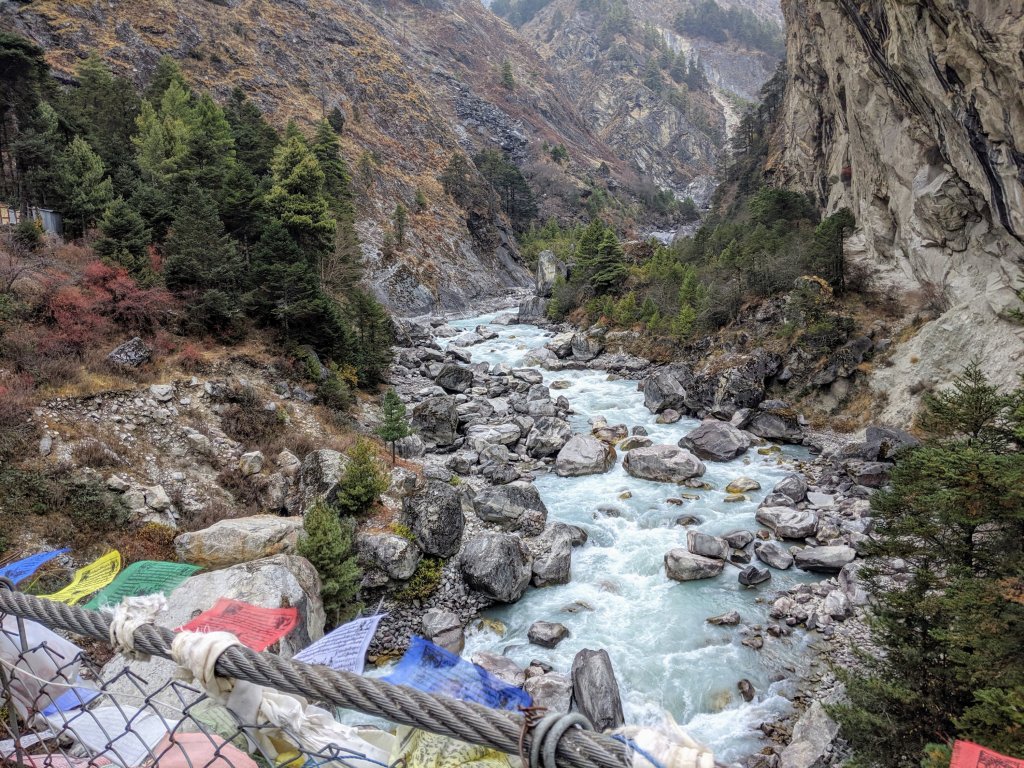
Environment. Nepal is an astounding country. It brags the tallest mountain in the world. Some of the most beautiful treks in the world. Crystal blue glacial rivers. National Parks with tigers and rhinos and bears.
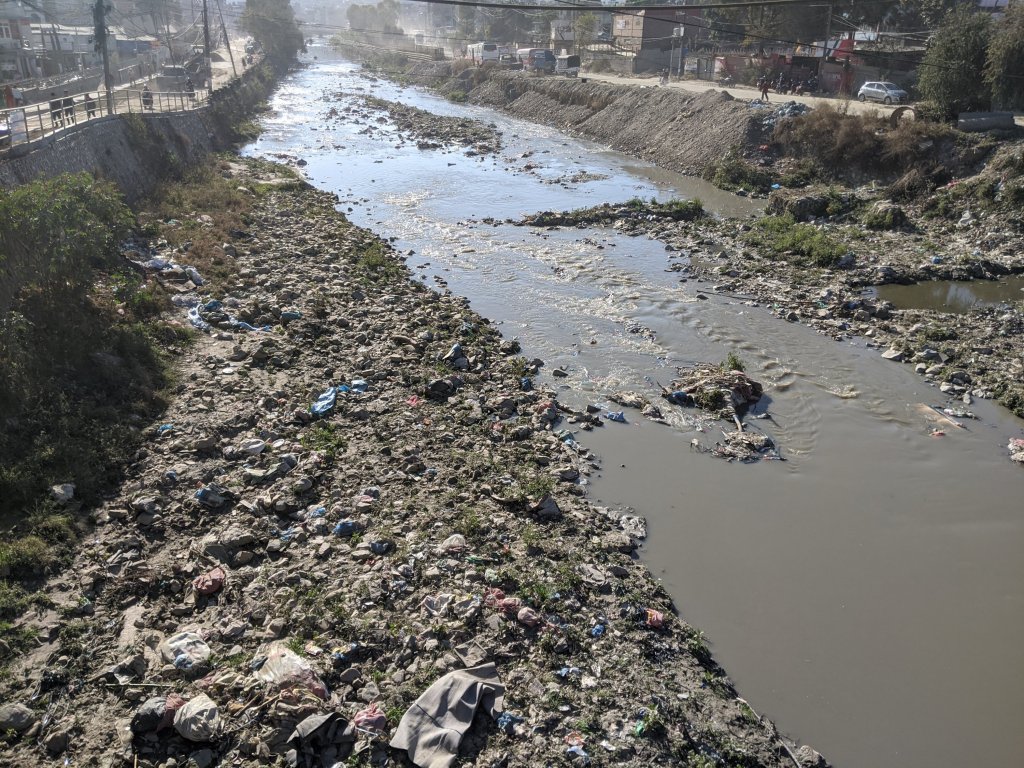
It is also the winner of the most rancid rivers I have ever seen, or smelled. I know the Ganges in Varanasi is now technically “diluted sewage” but the rivers running through Kathmandu were worse. The waterways were rancid, putrid filth, and people were, are, living and working right next to it, contributing to the mess by accidentally-on-purpose letting the plastic waste from their shop fall down the river bank. Having seen the source of this life-giving water in the Himalayas, it was disheartening to see, to say the least. It made me think we don’t deserve this planet.
Plastic is everywhere. In low levels, but strewn for miles. Is that the public’s fault, if the government hasn’t provided a suitable way of disposing of it? Is there no community action? I don’t know. It seems not.
The Bagmati river, which flows through Kathmandu and past the Pashupatinath cremation temple has had incidents of fish dying because it is so polluted from rubbish and sewage. There was, as I understand it, a short-lived clean up campaign.
4. Views, opinions, beliefs
I won’t go into this one much as it’s personal conversations with people, but in short, the few men I discussed views and beliefs with were very intolerant of any views other than their own. I realise this is a worldwide issue rather than exclusive to a nation, culture or religion, but I was surprised at their reaction all the same, from local people who I had come to spend quite a lot of time with. They were not willing to discuss ideas, only to say “No, that’s wrong, I am right”. One man staunchly held the belief that “Might equals right”. To him, that was fact. If we are able to do something towards another being, that means that it is right to do it. This belief basically goes against everything I believe in. He cited his religious beliefs as to why his view was correct and mine was not. I wasn’t going to get involved in religion. The conversation stopped there. This was on my second-to-last night of being in Nepal and it left a sour taste in my mouth. Respect goes both ways 🤷🏽
5. Finally… Caste
I won’t pretend that I know much about the caste system. What I do know is that, basically, your hereditary line determines your social standing, job, wealth etc. The ideals behind the caste system were made illegal in Nepal in 1962. I have read that they are still very prevalent as it has been instilled over generations. I have read that these beliefs are holding Nepal back from prosperity. For more information, this blog post from The Longest Way Home is useful.
The end. Never ending peace and love.
A lot wrong, a lot right. The country that I am from is the same, no doubt about it. I’d go back to Nepal for trekking for sure. I recommend the country to travellers I meet. They are having a big push for tourists called Nepal 2020 this year. Spending two months in the country has given me more of an insight than I’ll have in the other countries I am visiting on my travels, so it might seem slightly unfair that I’m picking on Nepal! It was the “Never Ending Peace And Love” phrase that was too easy to disprove, I couldn’t resist saying something about it.
 Kirsty B Adventures